A Reading Path Down a Rabbit Hole: Bhasha Chakrabarti
Selected conversations, interviews and profiles with artist Bhasha Chakrabarti
Quotes & images
Here are curated profiles and interviews with the artist.
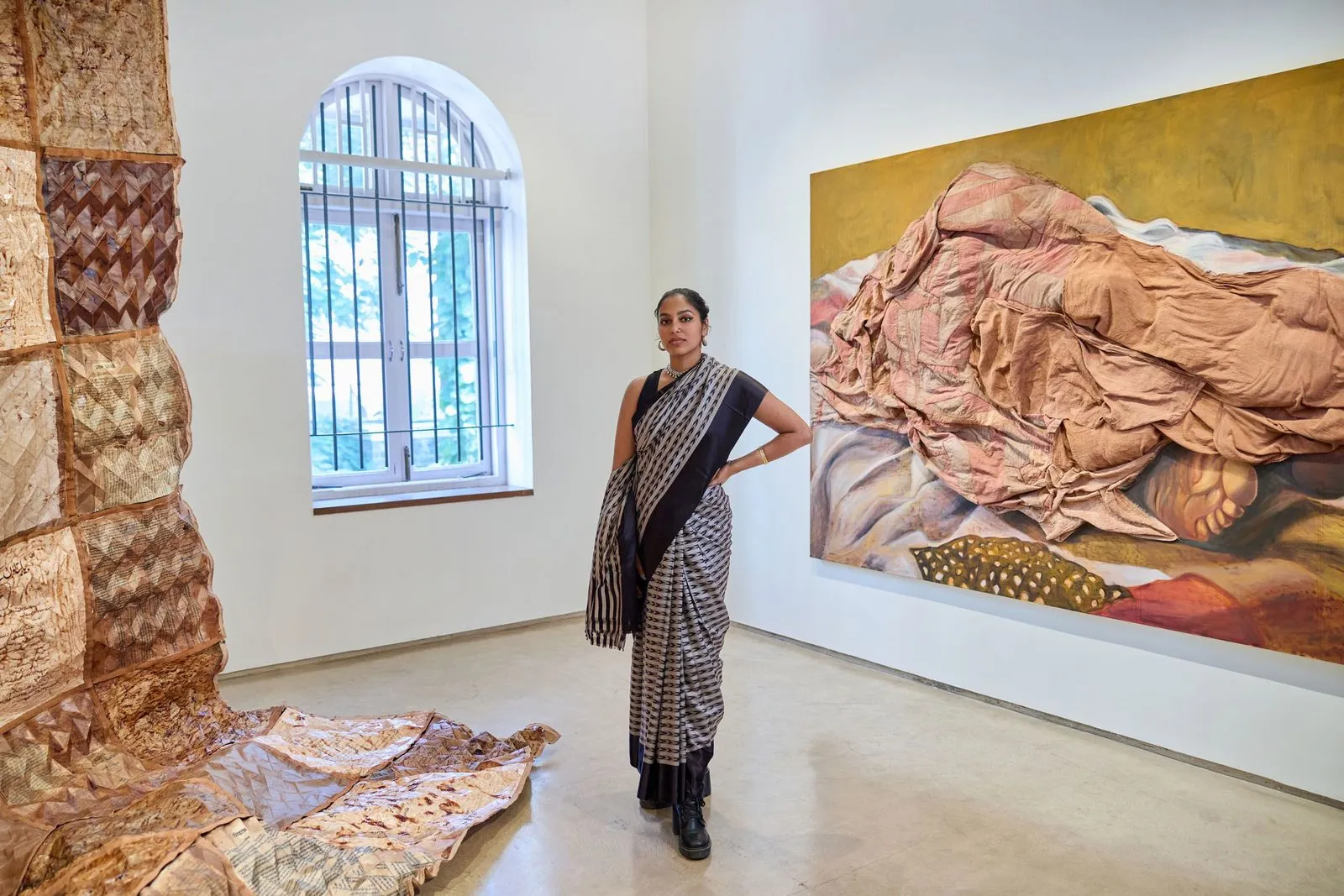
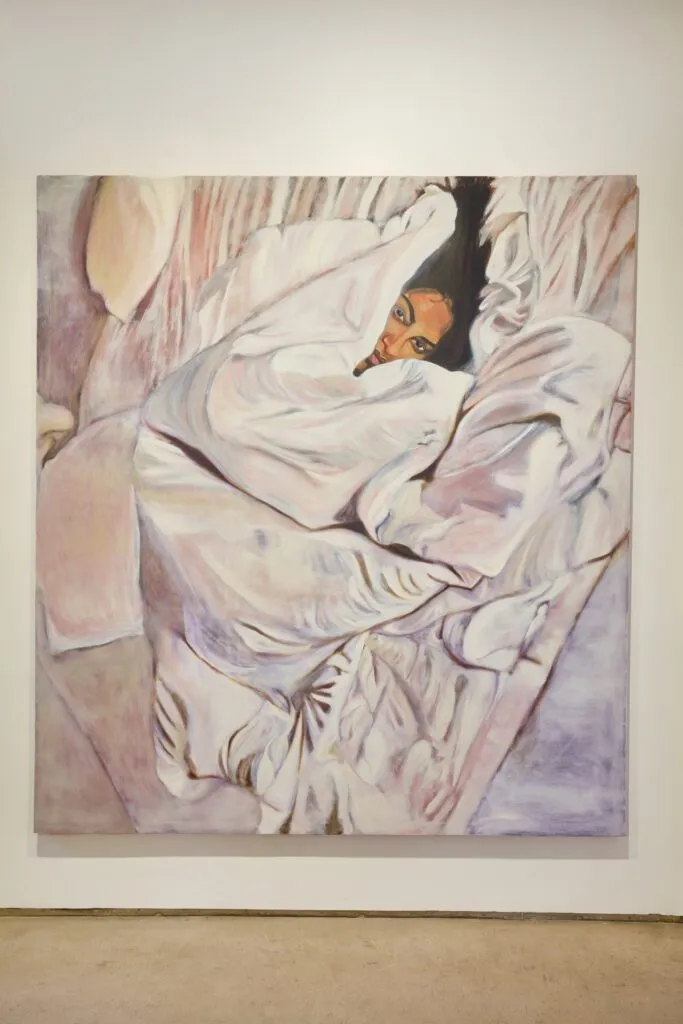
…her latest exhibit is inspired by Ismat Chughtai’s seminal short story, Lihaaf. Published in 1942, the story is an exploration of queer female desire and pleasure, told through the metaphor of a quilt.
Born in Hawaii to philosopher parents, the 33-year-old artist has lived in multiple geographical milieus, including New York and New Haven
Although she appreciated the arts growing up, she often viewed it as something distant and “museum-ised.” However, her career took a pivotal turn when she attended exhibitions featuring thought-provoking works by artists like Carrie Mae Weems and Kara Walker, whose work addresses racism, sexism, family dynamics, and power play.
This approach utilizes brown jouissance, defined by Amber Jamilla Musser as the knowledge-producing sensuality and sexuality which resides within the fleshiness of the brown, femme body and exceeds the constraints of objectification that are constantly placed upon it.
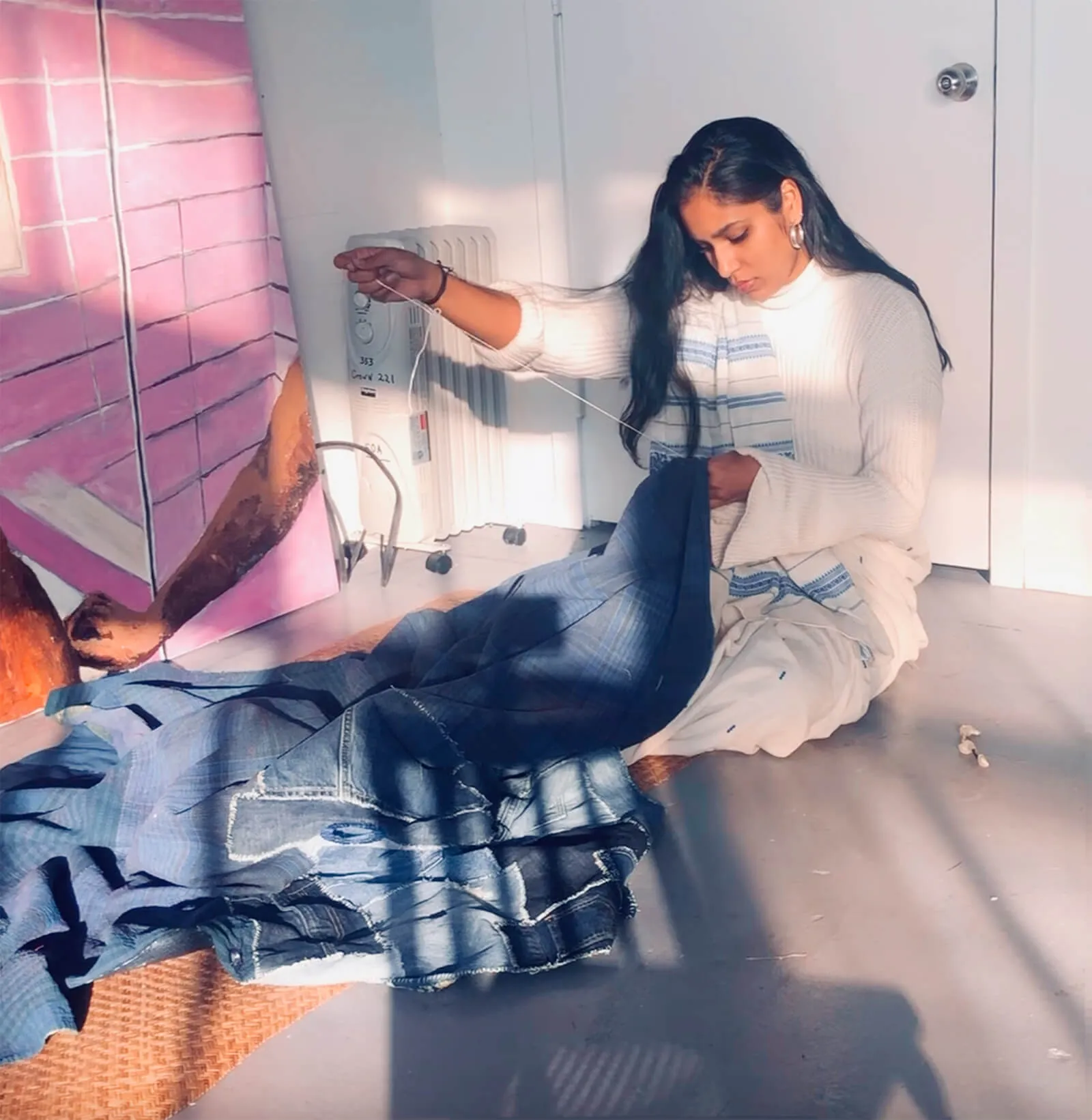
The centering of cloth in my work is the centering of embodied touch, both violent and erotic; gesturing to the actuality of ruptures in society, as well as the possibilities of mending, patching, and being quilted together in radically new ways.
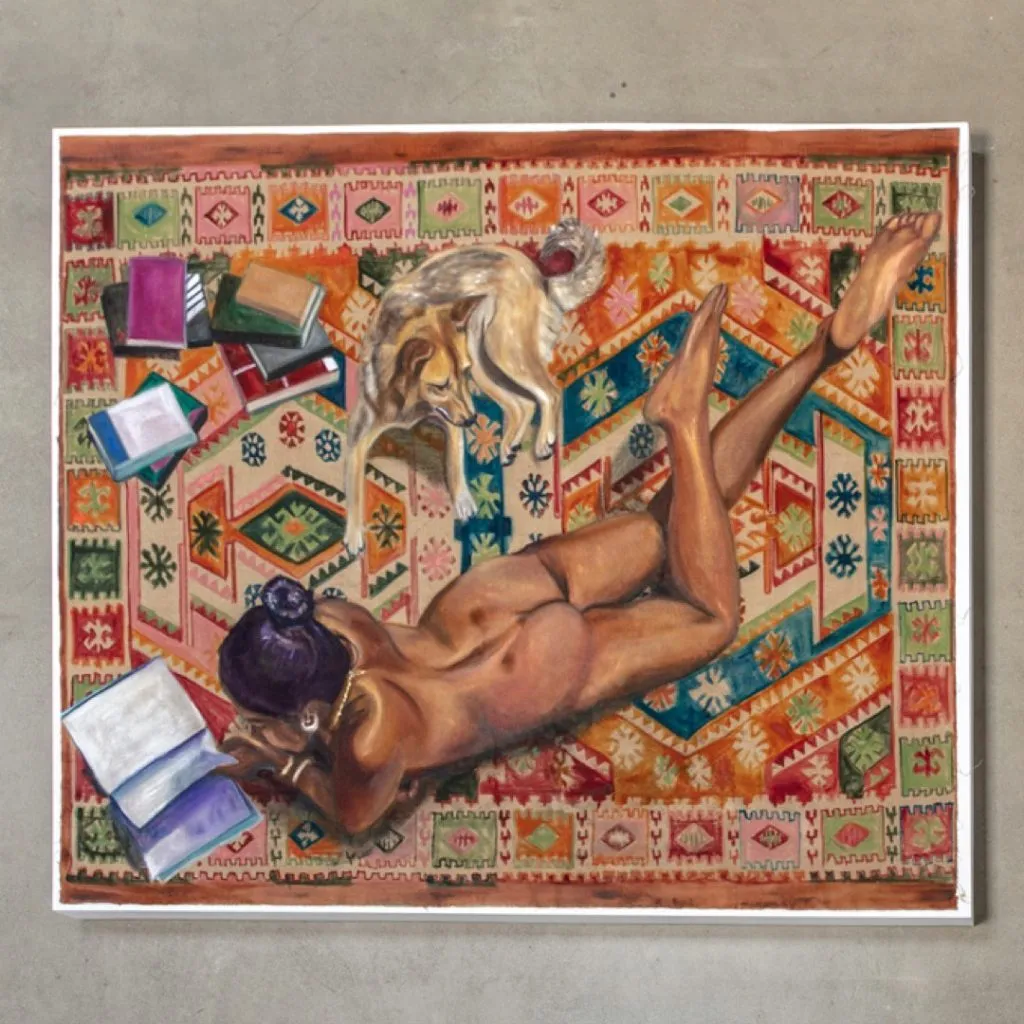
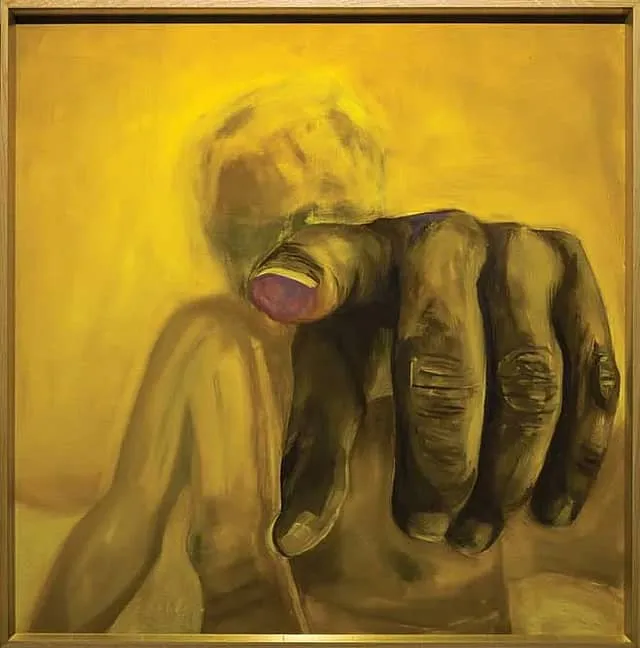
“We value fabric for its feel against our skin. That intimacy drives me,” she says. “Even paint — what is it but pigment, minerals, earth? I like bringing attention back to origins. Good art should leak out of the gallery and alter how you see the world,” she opines.
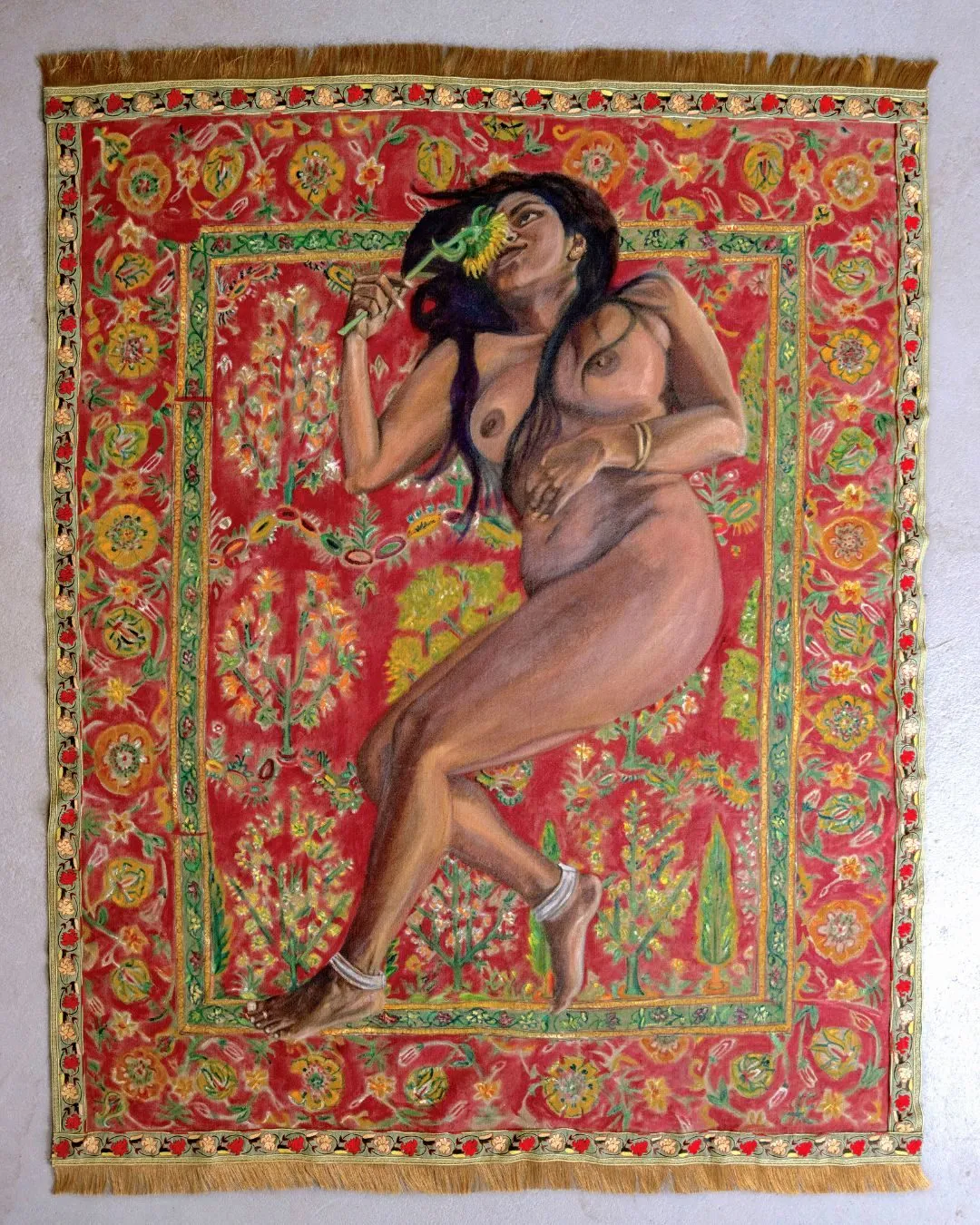
There’s the kantha (blanket) that I had as a baby. My great-aunt had made it for me from her old sari. I was very attached to it as an infant. That was my first encounter with a quilt, which is now such a prominent part of my work.
My mom used to wear saris all the time when I was a kid until I was in the second grade. Recently, I asked her, “What happened? Why did you stop?” My mom said, “Do you not remember what happened?”
When I was in the second grade, my mom chaperoned a school field trip and she wore a sari. It was to a sugar plantation house turned museum in Hawa’ii. At the plantation house there was an image of a woman plantation worker, likely Filipina, in a wrapped garment. A classmate said, “Oh, that’s what your mom dresses like.” I went home, crying and told her, “All you do is ruin my life.” From that point on, she stopped wearing saris. I think about this deep irony, because I wear saris almost all the time now.
But then, of course, I think about embroidery time in the context of capitalistic production and labour and it can start feeling really violent, exploitative and fetishised. I’m thinking of brands that advertise their clothes as having taken “60,000 hours and 45 people” to embroider and it just makes me shiver. Like, how do you want to wear that after hearing that? It’s troublesome. But, as an artist working with embroidery, I have to remind myself constantly to “stay with the trouble”, right?
Kuch Hai Features
Profiles and interviews
- Objects in this picture are louder than they appear
- Bhasha Chakrabarti
- Discover the riveting inner world of painter Bhasha Chakrabarti in a stunning portrait film
- The Quiet Symbol of Resistance: In Conversation with Bhasha Chakrabarti
- Conversations and Connections with Bhasha Chakrabarti
- Clothwork Opacities: An Interview with Artist Bhasha Chakrabarti
- Behind artists’ embroideries: Bhasha Chakrabarti and Elif Erkan on their process
- The Origins of Indigo, That Bluest Blue
- Bhasha Chakrabarti: Body Worship