A Reading Path Down a Rabbit Hole: Sumakshi Singh
Selected conversations, interviews and profiles with and about Indian artist Sumakshi Singh
Profiles and interviews
- At the Venice Biennale, Sumakshi Singh will present the soft power that women thread together (Supriya Lahoti, Livemint)
- Talks about emptiness. Sumakshi Singh on breath song and the mapping of illusion (Marina Antsiperova)
- Arts Illustrated (Praveena Shivram, June–July 2019)
- Art Talk with Sumakshi Singh | IAF Talks
- Unseeing the Object Lecture / by Sumakshi Singh (Jnanpravaha Mumbai, May 14, 2025)
- How Indian Artist Sumakshi Singh Is Giving Memories a Physical Presence (Pratyush Sarup, AD Middle East, September 25, 2025)
- VOICES - Episode 6 - Sumakshi Singh in conversation with Priya Pall
- Sumakshi Singh shares insights into her delicate thread drawings (QAGOMA, December 5, 2021)
Quotes & images
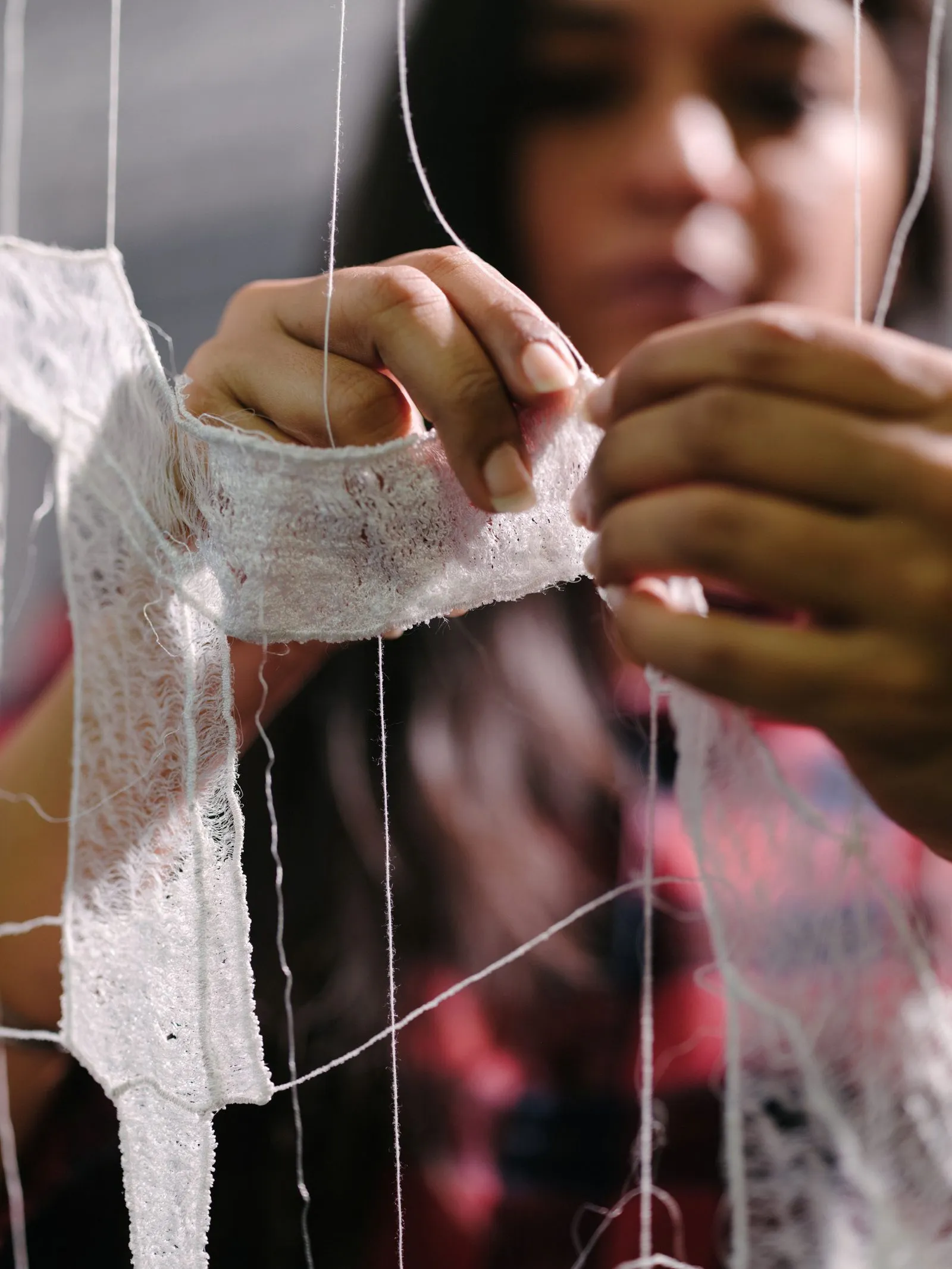
As Singh puts it, this “mirrors the way women’s labour has been seen as supplementary rather than foundational—as something extra.” In her work, that hierarchy is reversed. Once the base dissolves, the embroidery itself becomes the structure that holds the piece together. Subtly, Singh draws attention to the unseen labour of women, often dismissed, but crucial to how homes, families, and cultures are held together.
For Singh, home is an important concept not only as a physical space that one inhabits, but something that inhabits us as well. Her practice seems to move between attachment and release.
Do you address your art to those who are no longer with us?
Yes, so, I don’t know if I consciously address the work to them, but sometimes I feel like the work is coming from them. I can feel their presence inside me and that is prompting me to digest my relationship with that part of me that is feeling a sense of loss or grief in regard to that particular person. I mean even the embroidery and the thread. It’s not a medium that I’d used much before but it came back because, again, it was a connection to my mother.
I actually hate routine and I can’t keep to one with anything in my life except for my work. That’s because it doesn’t feel like a routine, the time I spend in my studio always feels new, and every time there I’m discovering something new.
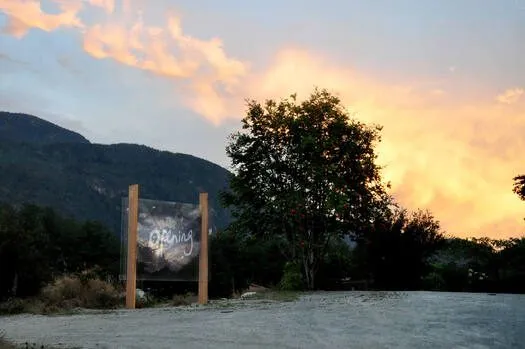
Going into the studio, holding those states (of fear or grief or dissonance or rawness) and then watching them get refined and transformed through the process of making into some thing much lighter, it’s a form of healing.

The weightless architecture of the thread structures, suspended in space, mirrored the fragmentary nature of memory and the lingering presence of what has been lost, dissolved or transformed.
Experimenting with various techniques, she found a way to embroider on soluble fabric and then dissolved the background.
Actually, I am quite suspicious of definitions. To me, a defined thing is in danger of becoming a dead thing. We tend to put it in a box of the ‘known’; we close down its other possibilities, forget to re-evaluate and revisit it and lose out on discovering that possible fountain of fresh, new insights springing from ‘the same old place’.
Kuch Hai readers want curation as catalyst rather than as a conclusion.