A Reading Path Down a Rabbit Hole: Shakuntala Kulkarni
Selected conversations, interviews and profiles with Karnataka-born multidisciplinary artist Shakuntala Kulkarni.
Quotes & images
In the Zen philosophy, archery is not about the target. It is about how you hold the bow and arrow, character, and focus.
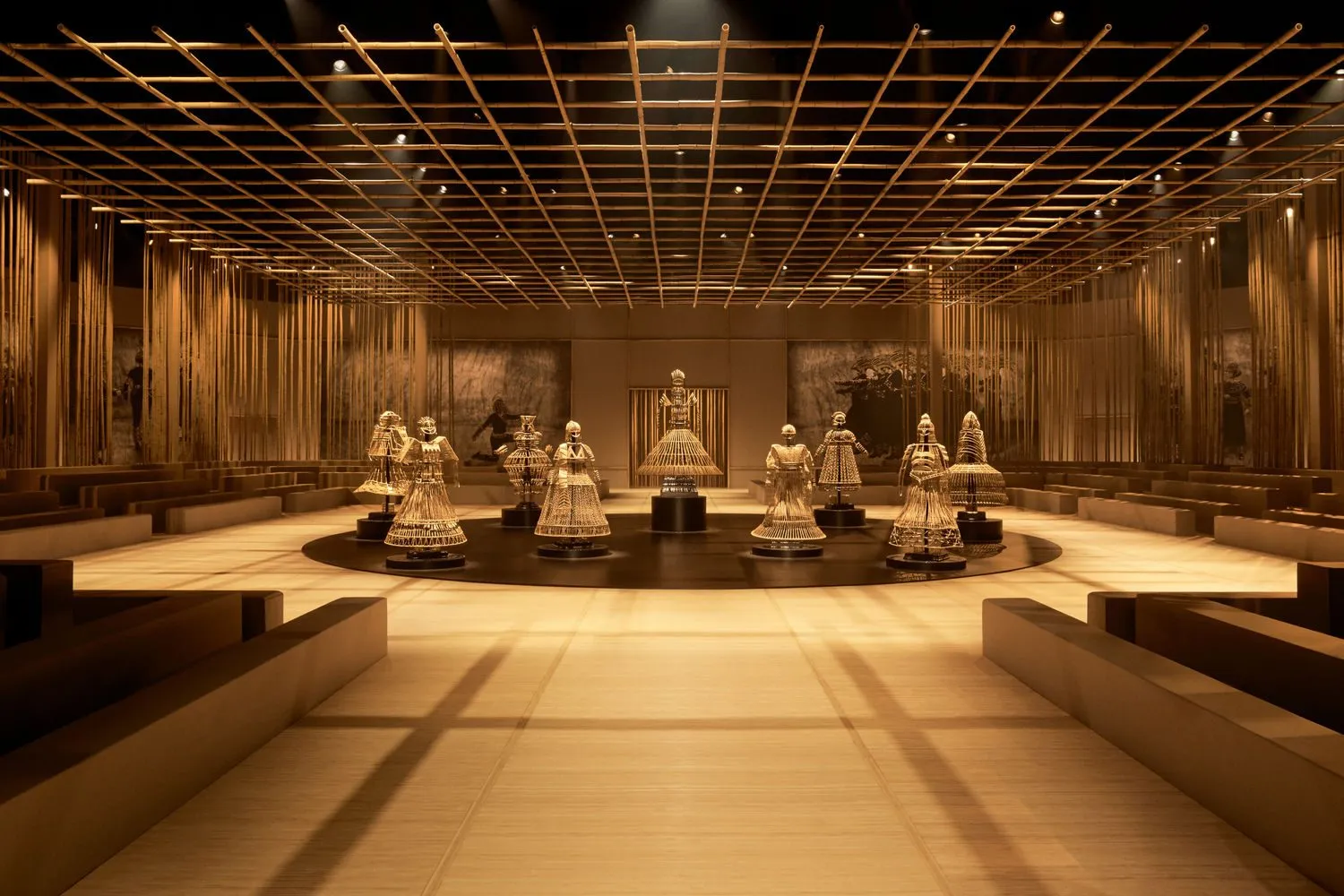
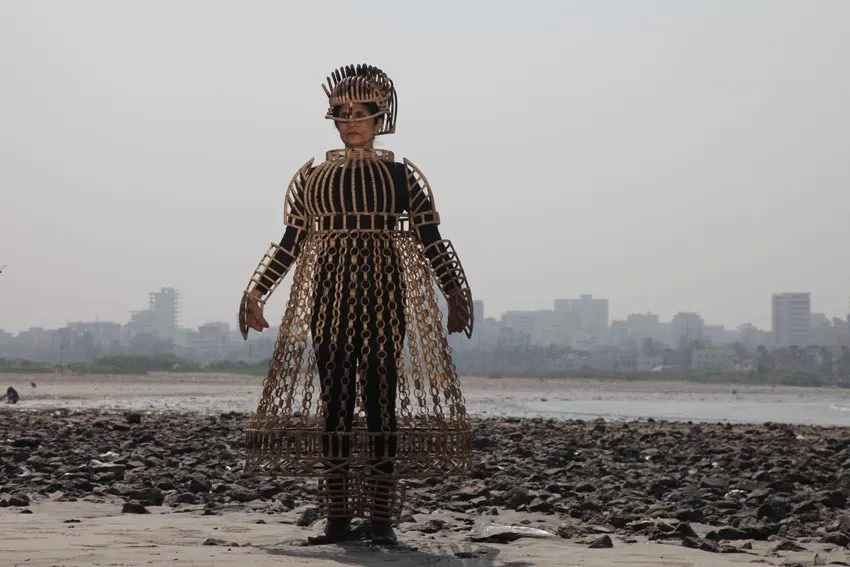
My project to create cane sculptures around the female form came from my research about atrocities on the female body. I need to address this, it is urgent. So the notion of female armour as a decoration and protection is where this project started
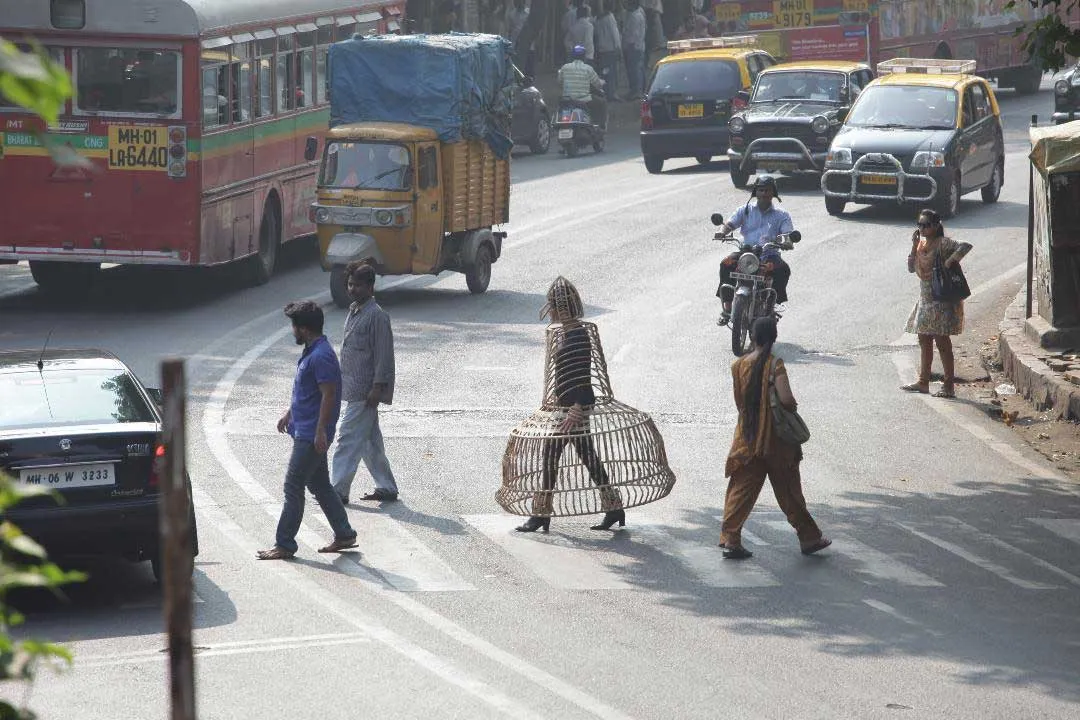
Whenever someone walks in these structures, you cannot walk freely. There is a lot of discomfort. You legs get caught or your hands get caught or you have to walk sideways… at the same time it is very dignified and beautiful. You can see the rhythm of the body.
I had worked on this project with Dinesh Pardesi from Mumbai, who repaired cane chairs, and Tonkeshwar and Dhun Barik from rural Assam who made cane thread jewelry.
Some of the books that helped me to clarify my thoughts regarding gender issues were Caste as a woman by Vrinda Nabar, Women’s Writings in India by Susie Tharu, RCWS gender series edited by Meera Kosambi, essays by Griselda Pollak.
Some of the women artists who have inspired me are, Frida Kahlo, Rebecca Horn, Marina Abramovic, Judy Chicago, Kiki Smith, Louis Bourgeois, Mona Hatoum, Janet Cardiff. From India Nalini Malani, Nilima Sheikh, Arpita Singh, N. Pushpamala, Rumana Hussain, Navjot Altaf & Anita Dubey.
Next to the accessories were the performance photographs where I was photographed standing, wearing the cane armor, guarding threatened spaces in Mumbai city that I have been associated with. I stand in the precarious spaces, like the traffic lights, middle of the road, on top of a building, with confidence and courage.
Almost three decades later, she’d circle back to make sure her viewers watched and experienced the discomfort she felt then as a woman.
I can’t call myself a jhanda-carrying activist feminist or a messiah. I’m working within a much more private space where I address issues through my art practice. It’s the only way I can hope to shift perspectives,” she says.
You were surely aiming to evoke a specific reaction from your viewers? Yes, I wanted them to experience discomfort. I wanted to explore the impact of the gaze. I created my women as I wanted, not how the male gaze wanted to see them as an act of defiance. So, I decided not to place the paintings at regular eye level but I still didn’t know what else I could do to achieve the discomfort. A chance visit to see Rococo paintings with my daughter gave me the idea. I put the entire series on the ceiling and, for ease of viewing, let viewers see them through a mirror if they wanted.
Clothing can speak about power, freedom, dignity, and respect. Apart from that it can create a powerful female gaze. It can also be a metaphor for protecting the female body while at the same time trapping it, creating restrictions on free movement. I have used these metaphors to address the atrocities on the female body, which can cause discomfort, fear, and upset.
…she has pulled into her productions, variously, mediaeval coats of mail, Tudor-period costumes culled from Hollywood historical, punk Gothic outfits, the bouffant hairstyles and outrageous gowns of 1970s popular Hindi cinema, the grunge chic element in contemporary fashion, the costumes used in classical Indian dance, and the futuristic gear favoured by the protagonists of science-fiction cult classics.
At first sight, Kulkarni’s sculptures, sumptuous in their austerity, appear to demonstrate a melancholy psychological truth: that the various forms of armour we create for ourselves do not save us from vulnerability, so much as they dramatise the human predicament of being always and utterly vulnerable
I never show women as victims,” she says emphatically. “They are victimised. They are not completely weak. I show how they fight it out, how they deal with it.
…this one in cane trousers that the artisan Dinesh had refused to create for months, until she tapped into his love for Bollywood, suggesting that he should make them resemble Amitabh Bachchan’s white pair in Amar Akbar Anthony (1977). Creating breasts for the armour proved to be another hurdle “because he was embarrassed coming from a different culture, a different background”
I will remain as free and powerful as ever, even in this confined space,” she remembers thinking then.
Kuch Hai Features
Wander the region
Profiles and interviews
- Using art as a voice against violence | Shakuntala Kulkarni | TEDxEMWS (TEDx Talks, August 21, 2024)
- Shalini Passi in conversation with Shakuntala Kulkarni (MASH India)
- Shakuntala Kulkarni Fights Battles Through Art (Jayeeta Mazumdar, Sarmaya, July 16, 2019)
- The Extreme Occasions Of the Prosthetic Self (Ranjit Hoskote, Usawa Literary Review, May 13, 2026)
- Emami Art Talks 2.0 with Shakuntala Kulkarni (Emami Art, June 10, 2020)
- Shakuntala Kulkarni’s Work Pays Attention To Women’s Experiences And Spaces (Shirin Mehta, Verve Magazine, May 7, 2024)